
Stylish Cat Furniture for Small Apartments


Table of Contents
- Why Stylish Cat Furniture Matters in Compact Living
- Space-Saving Cat Trees and Vertical Solutions
- Modern Cat Wall Shelves and Bridges
- Multi-Functional Cat Furniture with Hidden Storage
- How to Arrange Cat Furniture in a Small Room
- Cat Furniture That Looks Like Decor
- Choosing the Right Materials and Durability
- Budget-Friendly and Luxury Options Compared
- Frequently Asked Questions
Last Updated: September 4, 2026
Why Stylish Cat Furniture Matters in Compact Living
Living in a small apartment doesn't mean your cat has to sacrifice enrichment, and it doesn't mean you have to sacrifice your design aesthetic. Stylish cat furniture for small apartments solves the dual challenge of feline enrichment and spatial efficiency, turning vertical space into a functional cat playground without cluttering your floor plan. For cat owners in studios and one-bedroom units, the right pieces transform a potential eyesore into a seamless extension of your home decor.
At Paws & Claws, a thoughtful approach to cat furniture can reduce the urge to scratch couches and climb curtains. Cats naturally seek high vantage points for security, a behavior rooted in their instincts (peer-reviewed research). When you provide dedicated vertical space, you're not just decorating; you're supporting feline enrichment and reducing stress-related behaviors. The key is choosing pieces with a compact design that maximizes function per square inch, a principle that guides our curated selection.
The challenge most apartment dwellers face is finding furniture that balances a cat's need for activity with a room's limited footprint. Weight capacity versus footprint ratio matters here: a tall, wobbly tree is useless, while a sturdy, low-profile perch might not satisfy a climber. Below, we'll walk through the best categories of space-saving cat furniture, from floor-to-ceiling options to wall-mounted systems, and show you how to arrange them for both your cat and your space.
Space-Saving Cat Trees and Vertical Solutions
The most effective cat trees for small apartments prioritize height over width, using a narrow footprint to reach ceiling space. A vertical cat tree with a compact base, typically 15 to 20 inches square, can rise six feet or more, offering multiple perches, a cat hammock, and a cozy cat cave without dominating the room. This design delivers the climbing and scratching opportunities cats need while keeping the floor clear for walking and other furniture.
Look for models with a sturdy, weighted base and a scratching post wrapped in sisal, the material cats prefer for claw maintenance. Stability is non-negotiable: a tree that topples during an energetic jump can injure your cat and damage your home. Many owners find that a floor-to-ceiling tension rod design offers good stability for a small footprint, though these require careful assembly and a ceiling that can support the pressure without damage.
For multi-cat households, a single vertical unit with multiple levels encourages healthy activity and reduces competition for prime real estate. Ensure the weight capacity of each platform comfortably exceeds your heaviest cat, and check that all upholstery is non-toxic and easy to wipe clean.
Modern Cat Wall Shelves and Bridges
Wall-mounted cat shelves and bridges are the ultimate space-saving solution, converting unused wall area into a modular cat playground. These systems consist of floating shelves, perches, and connecting bridges that allow your cat to traverse the room at height, completely eliminating the need for floor space. Modern cat wall shelves come in minimalist designs, from simple floating wood planks to upholstered cat perches that blend with your bookcase or gallery wall.
The primary advantage is customization: you can install a single shelf near a window for bird-watching or create an entire circuit around the room's perimeter. This modular growth means you can start small and expand as your cat's confidence grows or as your budget allows. Installation is the critical factor, especially in rental units where drilling into walls may be restricted.
When arranging shelves, provide a clear path with no gaps wider than your cat's comfortable jump range, typically 12 to 18 inches between platforms (peer-reviewed research). Place shelves at staggered heights to encourage natural climbing behavior and offer a mix of open perches and enclosed spaces for security.
Multi-Functional Cat Furniture with Hidden Storage
For apartments where every square foot counts, furniture that combines cat amenities with human storage is a game-changer. Multi-functional pieces include cat condos that double as end tables, ottomans with built-in cat caves, and bookshelves with integrated cat shelves and hideaways. These designs allow you to maintain a clutter-free aesthetic while providing your cat with dedicated territory.
A prime example is a console table with a tunnel or cat cave integrated into the base, offering your cat a private retreat while you gain a surface for decor or storage. Similarly, a cat tree designed as a modern sculpture can anchor a corner without looking like a pet product. The best options feature high-quality materials like solid wood or powder-coated metal that match your existing furniture, rather than the garish carpet-covered designs of the past.
One practical consideration is the placement of a cozy bed near your own seating area. Cats are social creatures and often want to be near you, so a stylish cat bed that complements your sofa or armchair encourages them to stay off your furniture (peer-reviewed research). The Dog and Cat Bed with Bunny Ears from Paws & Claws, at $24.99, offers a charming, decor-friendly option in grey, pink, or brown that fits neatly beside a couch.

How to Arrange Cat Furniture in a Small Room
Arranging cat furniture in a small room requires a deliberate plan that addresses your cat's needs and your visual priorities. Start by identifying the room's vertical zones: the area near a window for bird-watching, a quiet corner for napping, and a high-traffic path for activity. Place the main cat tree or wall shelves in the window zone, as cats spend hours observing the outdoors, which provides essential mental stimulation.
Next, create a clear circulation path for your cat that doesn't interfere with human movement. A common mistake is blocking doorways or narrow walkways with bulky furniture. Instead, use wall-mounted options to keep the floor clear, and position floor pieces against walls or in corners where they won't obstruct traffic. Consider layering: a low cat bed near your desk, a mid-level shelf along the wall, and a high perch for observation.

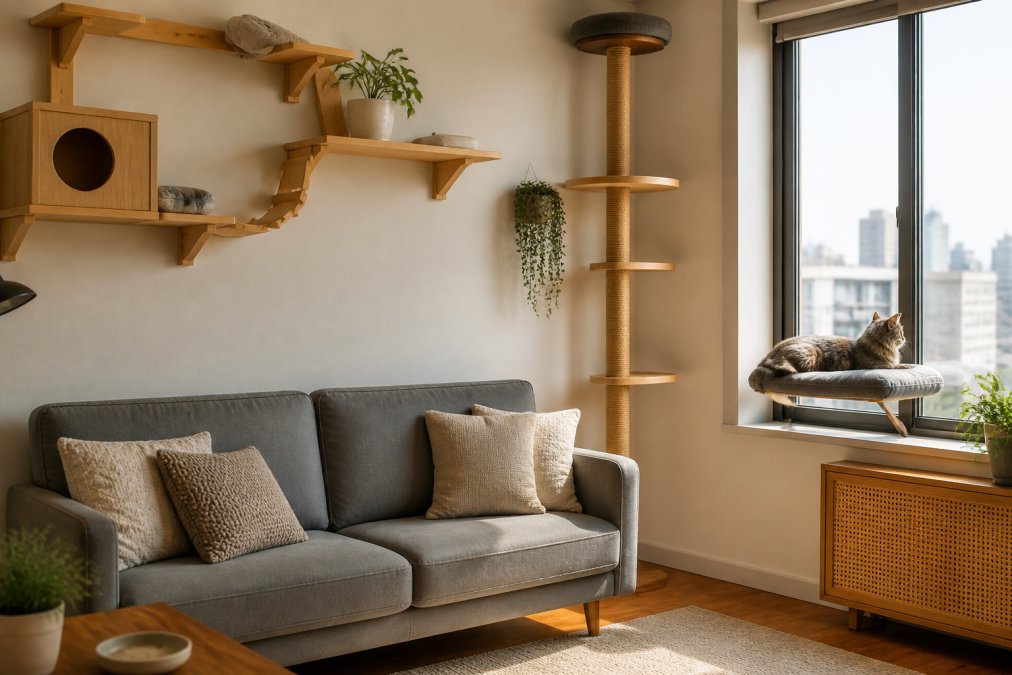
For multi-functional furniture, place it where it serves double duty. An end table with a cat cave can sit beside your sofa, while a cat tree with storage shelves can replace a traditional bookcase. The goal is to integrate cat elements so they read as intentional decor, not afterthoughts. This approach ensures your space feels cohesive while meeting your cat's behavioral needs for climbing, scratching, and hiding.
Cat Furniture That Looks Like Decor
The market for cat furniture that looks like decor has expanded dramatically, offering options that are indistinguishable from high-end home furnishings. Design-forward pieces now come in clean lines, natural wood finishes, and neutral upholstery that complement modern, minimalist, and Scandinavian interiors. This shift means you no longer have to choose between a stylish home and a happy cat.
Sculptural cat trees that resemble abstract art, wall shelves that mimic floating bookcases, and cat condos housed in sleek cabinets are all viable options. When selecting these pieces, focus on the materials: solid wood, birch plywood, and wool-blend upholstery read as premium and age well, while carpet-covered pieces quickly look worn. Non-toxic finishes are essential, as cats will lick and chew surfaces.
A simple way to elevate the look is to choose pieces that match your existing color palette. A neutral beige or grey cat bed, like the Sleeping Bag for Pets from Paws & Claws at $24.99, blends with most interiors while offering your cat a warm, secure retreat. For a hydration station that doubles as decor, the Elevated Ceramic Pet Water Bowl with Wooden Stand at $98.95 brings a warm, modern touch to any room.

Choosing the Right Materials and Durability
Material choice directly determines how long your cat furniture lasts and how well it holds up to daily use. Sisal rope is the gold standard for scratching posts because it allows cats to dig their claws in and satisfies their need to scratch, protecting your sofa and rug. Look for tightly wound, natural sisal rather than thin synthetic alternatives that fray quickly.
For upholstery and perches, consider durability and cleanability. Plush fabrics are comfortable but can mat and collect fur; choose machine washable covers where possible. Wood frames offer superior stability compared to particleboard, especially for taller structures. The Self-Warming Cat Bed from Paws & Claws, available at $45.99, uses a durable, washable thermal pad that captures body heat without electricity, making it a practical and long-lasting choice for year-round comfort.
Weight capacity is another critical durability metric. A flimsy perch rated for 10 pounds will fail quickly for an average adult cat. Always check the manufacturer's weight rating and choose furniture that exceeds your cat's current weight to account for healthy growth and enthusiastic jumping.
Budget-Friendly and Luxury Options Compared
Cat furniture for small apartments spans a wide price range, and the right choice depends on your budget and how long you expect the piece to last. Budget-friendly options, typically under $50, include basic cat beds, simple scratching posts, and smaller cat trees. These are often made with lighter materials and may have a shorter lifespan, but they can be an excellent starting point for kittens or first-time owners.
Mid-range furniture, from $50 to $150, offers better materials, improved stability, and more sophisticated designs. This category includes well-constructed wall shelves, multi-level cat trees with quality sisal, and furniture pieces with hidden storage. For most apartment dwellers, this is the sweet spot, balancing cost with durability and aesthetic appeal.
Luxury options above $150 are where you find designer collaborations, solid hardwood construction, and customizable modular systems. These pieces are built to last for years and often feature replaceable parts, but the upfront cost is significant. The table below summarizes the trade-offs to help you decide.
| Category | Price Range | Materials | Best For | Trade-off |
|---|---|---|---|---|
| Budget-Friendly | Under $50 | Particleboard, plush fabric | Kittens, temporary setups | Shorter lifespan, less stable |
| Mid-Range | $50 - $150 | Solid wood, natural sisal | Most apartment owners | Good balance of cost and quality |
| Luxury | $150+ | Hardwood, designer upholstery | Long-term investment | High initial cost |
A smart strategy is to mix categories: invest in a sturdy, mid-range or luxury cat tree for daily climbing, and supplement with budget-friendly beds and toys. This approach maximizes your budget while ensuring the core furniture piece is safe and durable. At Paws & Claws, our curated selection focuses on the mid-range and luxury tiers, prioritizing products that offer real longevity and style, so you can feel confident your purchase will last.
Choosing stylish cat furniture for small apartments is about more than picking a product; it's about designing a living space that works for every member of your household. The challenge is finding pieces that respect your square footage, your rental agreements, and your design sensibilities while still delivering the vertical space and enrichment your cat needs. Paws & Claws simplifies this process by curating a collection of furniture and essentials that balance quality, usefulness, and style, so you can build a home that is both beautiful and cat-friendly. Explore our selection of space-saving cat trees, modern wall shelves, and cozy beds to find the perfect fit for your space, and give your cat the enriched, comfortable life they deserve. Get started with Paws & Claws and transform your apartment into a stylish sanctuary for both of you.
Frequently Asked Questions
What is the best stylish cat furniture for limited space?
Vertical cat trees and wall-mounted shelves maximize floor space while providing the enrichment cats need. Wall-mounted options take up no floor footprint, while compact vertical trees with multiple levels fit snugly into corners. Look for pieces with sisal scratching posts, cat hammocks, and perches that serve multiple functions. Multi-functional furniture that combines storage with cat activity zones works especially well in small apartments, keeping your space clutter-free while your cat stays active.
Can you have a cat tree in a small apartment?
Yes, absolutely. Modern cat trees come in compact sizes designed specifically for apartments. Floor-to-ceiling models maximize vertical space without taking up much floor area, while corner-mounted trees fit into unused corners. Wall-mounted shelving systems and bridge installations provide climbing and perching without traditional tree footprints. The key is choosing furniture with a small floor footprint but tall vertical reach. Many apartment-friendly options include cat caves, hammocks, and perches that give cats multiple activity zones in minimal space.
How do you hide cat furniture in a small apartment?
Integrate cat furniture into your decor by choosing pieces that match your aesthetic, such as wooden wall shelves that blend with bookcases or wall-mounted units in neutral colors. Multi-functional furniture like ottomans with hidden cat caves or benches with built-in perches serve double duty. Place vertical cat trees in corners or against walls rather than room centers. Use cat furniture that looks like decor, such as minimalist wooden perches or modern shelving systems in matte finishes. Soft upholstery in your home's color palette helps cat furniture blend seamlessly into your living space.
What materials make cat furniture durable in small apartments?
Sisal rope, corrugated cardboard, and high-quality upholstery are proven durable materials for cat scratching and activity. Look for solid wood frames with reinforced joints that support weight capacity without wobbling. Non-toxic finishes and machine-washable covers extend furniture life and keep your apartment fresh. Durable materials resist wear from multiple cats and frequent use. Wall-mounted shelves should support at least 25 pounds to ensure stability. Quality construction matters more in small spaces where furniture gets heavier use and is more visible, so investing in durable pieces pays off long-term.