
Essential Supplies for New Puppy Owners: A Complete Guide


Table of Contents
- Essential Supplies for New Puppy Owners: What You Actually Need
- Puppy Feeding Schedule by Age: Getting Nutrition Right
- Puppy Crate Training Tips: Building Confidence and Safety
- Puppy Proofing Checklist: Preparing Your Home
- How to Socialize a New Puppy: Building Confidence and Manners
- Training Gear and Potty Supplies: Foundation for Good Habits
- Health, Grooming, and Enrichment: Complete Care
- Budget-Friendly vs. Premium: Finding Your Sweet Spot
- Frequently Asked Questions
Last Updated: September 3, 2026
Essential Supplies for New Puppy Owners: What You Actually Need
Bringing home a new puppy is one of life's great joys and logistical challenges. A puppy that starts with the right foundation, in a properly prepared home, with thoughtfully chosen supplies, develops faster and with fewer behavioral issues down the road. This guide from Paws & Claws covers the essential supplies for new puppy owners that actually move the needle, not the endless list of trendy gadgets that sit unused.
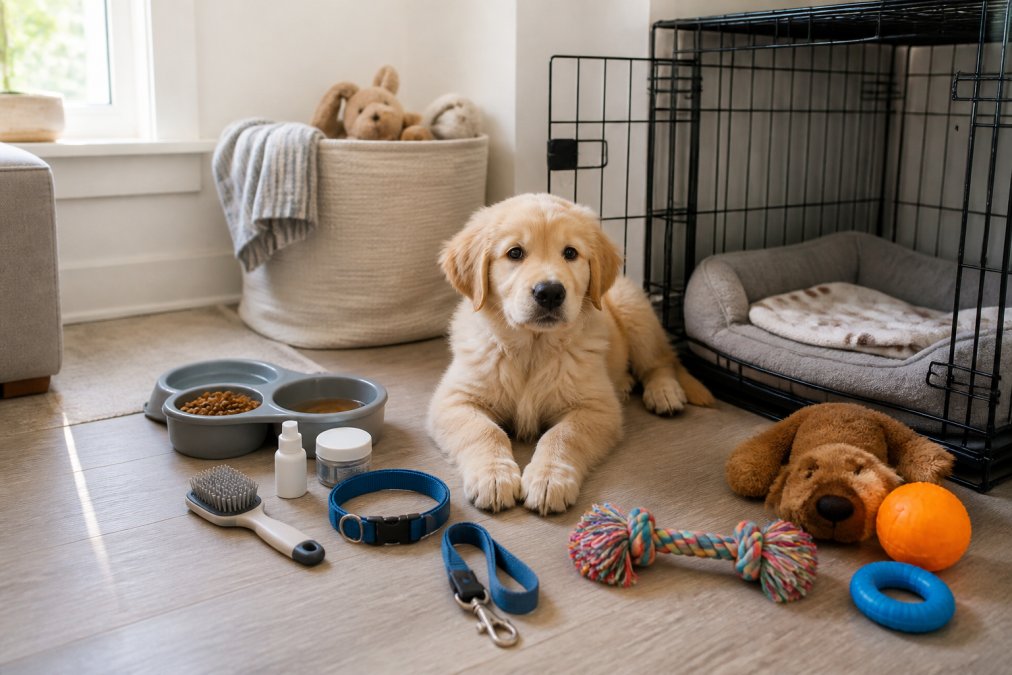
Most new owners buy too much, too fast. The real approach is different: start with what your puppy genuinely needs during the first 12 weeks. Everything else can wait.
Feeding and Nutrition Essentials
Your puppy needs a simple, durable bowl and high-quality puppy kibble formulated for their age and expected adult size. Puppies grow rapidly and have different nutritional needs than adult dogs. Look for food with appropriate protein levels (typically 22-32% for large breed puppies, higher for small breeds) and proper calcium-to-phosphorus ratios to support skeletal development (aafco.org).
You'll also need training treats, small, soft pieces your puppy can eat quickly during training sessions. Avoid hard biscuits that slow down your training rhythm.
Comfort and Bedding
A puppy needs a designated, comfortable resting spot. A crate with soft bedding serves double duty: it becomes your puppy's den and the foundation for crate training. Choose a crate sized for your puppy's current size, not their adult size. A crate that's too large defeats the purpose because your puppy can soil one end and sleep in the other.
Soft bedding inside the crate makes it inviting. A simple blanket or budget-friendly dog bed works perfectly. Paws & Claws offers options like the Orthopedic Dog Bed ($89.99), though for a young puppy in their first weeks, even a folded towel is acceptable until they're past the teething phase.

Safety and Identification
Your puppy needs an ID tag with your current phone number attached to their collar immediately. This is non-negotiable.
A microchip provides permanent identification that can't be lost or removed. Most veterinarians recommend microchipping during the first veterinary visit at a cost of around $25-50 (avma.org).
A properly fitted collar or harness keeps your puppy safe during walks. For puppies, a harness often works better than a collar because it distributes pressure across the chest rather than concentrating it on the developing neck.
Puppy Feeding Schedule by Age: Getting Nutrition Right
Feeding schedules change as your puppy grows. Understanding what your puppy needs at each stage prevents both malnutrition and overfeeding.
Birth to 8 Weeks: Mother's Milk and First Foods
During the first 4 weeks, puppies rely entirely on their mother's milk. Around 3-4 weeks, puppies begin eating soft food in addition to nursing. By 6-8 weeks, most puppies eat moistened kibble four times per day while still nursing.
When you bring your puppy home at 8 weeks, they should already be eating solid food. Continue the same food and feeding schedule the breeder used for the first week to minimize digestive stress.
8 to 12 Weeks: Transition to Puppy Kibble
At 8 weeks, feed your puppy four times per day. Most 8-week-old puppies eat about 1/4 to 1/2 cup per meal, depending on the food and breed.
By 12 weeks, transition to three meals per day and gradually reduce moisture in the kibble until your puppy eats dry food. Feed at the same times each day, this predictability makes potty training far easier.
3 to 6 Months: Building Healthy Eating Habits
By 3 months, most puppies move to two meals per day. Portion sizes increase as your puppy grows, but the specific amount depends on the food brand and expected adult size.
Monitor your puppy's body condition, you should feel their ribs without pressing hard, but not see them prominently. Avoid feeding table scraps, as puppies that learn to beg develop persistent bad habits.
Puppy Crate Training Tips: Building Confidence and Safety
Crate training is one of the most valuable skills you can teach your puppy. A properly trained puppy sees the crate as their safe space, not a punishment, preventing separation anxiety and destructive behavior later.
Choosing the Right Crate Size
The crate should be large enough for your puppy to stand, turn around, and lie down comfortably, but not so large that they can soil one end and sleep in the other. Use a divider panel to reduce usable space as your puppy grows, or choose a smaller crate and upgrade later.
Wire crates allow better airflow and visibility than plastic crates, reducing anxiety. Plastic crates are more portable but can feel more den-like, which some puppies prefer.
Introduction and Positive Reinforcement
Never force your puppy into the crate or use it as punishment. Instead, make the crate rewarding. Toss treats inside and let your puppy explore voluntarily. Feed meals inside the crate with the door open.
Once your puppy enters willingly, close the door for short periods while you're present. Gradually extend the duration. The first night is hard, your puppy will cry, which is normal. Respond to genuine distress (your puppy needs to eliminate) but ignore protest crying. Giving in teaches your puppy that crying gets results, making the problem worse.
Puppy Proofing Checklist: Preparing Your Home
A puppy explores the world by putting things in their mouth. Get down on puppy level and identify what they can reach, chew, or swallow.
Hazards to Remove and Secure
Common household items dangerous to puppies include electrical cords, cleaning supplies, medications, small objects (coins, buttons, hair ties), houseplants, chocolate, grapes, raisins, xylitol, loose wires, and plastic bags. Secure trash cans with lids or store them in closed cabinets.
Creating Safe Play Zones
Designate a puppy-safe area where your puppy can play without constant supervision. A playpen or gated room works well. Rotate toys to maintain interest, five toys available all the time is better than twenty.
How to Socialize a New Puppy: Building Confidence and Manners
Socialization means exposing your puppy to different people, environments, sounds, and experiences so they grow into a confident adult dog. A poorly socialized puppy often becomes an anxious or aggressive adult dog, regardless of training.
Critical Socialization Window (3 to 16 Weeks)
The window for socialization is narrow and doesn't reopen. Puppies are most receptive to new experiences between 3 and 16 weeks of age. This shapes your puppy's personality and confidence for life.
This doesn't mean visiting 50 different places. It means consistent, positive exposure to a variety of people (different ages and appearances), environments (busy streets, quiet parks, different surfaces), and sounds (traffic, vacuum, doorbell, other dogs).
Before your puppy completes their vaccination series, socialize them in low-risk environments. Carry your puppy to busy areas so they hear traffic and see crowds. Invite friends to your home. Play recordings of common sounds.
Safe Exposure and Positive Experiences
The key word is "positive." Dragging your puppy toward something scary creates negative associations, not confidence. Let your puppy approach at their own pace. If hesitant about a new person, have that person toss treats on the ground rather than reaching toward your puppy.
Watch your puppy's body language. A tucked tail, pinned ears, or whale eye means your puppy is uncomfortable. Back away and try again in a lower-pressure context.
Training Gear and Potty Supplies: Foundation for Good Habits
The right gear makes training easier and more effective.
Leash, Collar, and Harness Essentials
A 4-6 foot leash gives you control while allowing exploration. Avoid retractable leashes for puppies, they don't teach leash manners and can cause injuries.
A harness distributes pressure across the chest rather than the neck, which is better for a growing puppy. Front-clip harnesses reduce pulling by redirecting your puppy's forward motion toward you when they pull.
A collar serves primarily for ID tag attachment. A properly fitted collar should allow one finger between the collar and your puppy's neck.
Training treats should be small (pea-sized), soft, and highly rewarding. Your puppy should care more about the treat than anything else happening around them.
Potty Training Supplies and Enzymatic Cleaners
If you use puppy pads, place them consistently in the same spot and reward your puppy for using them. The goal is to transition from pads to outdoors as your puppy's bladder control improves.
An enzymatic cleaner is essential. Regular cleaners mask the scent but don't eliminate it. Your puppy can still smell where they eliminated before, encouraging them to eliminate in the same spot again. Enzymatic cleaners break down urine compounds at a molecular level, actually removing the scent.
Paws & Claws carries The Original Poop Bags ($34.99), which are USDA-certified plant-based bags that reduce environmental impact while handling cleanup reliably.
Health, Grooming, and Enrichment: Complete Care
Your puppy needs regular health care, grooming, and mental stimulation to prevent problems and build a strong foundation for adulthood.
Health and First Aid Basics
Schedule a veterinary checkup within the first week of bringing your puppy home. Your vet will evaluate your puppy's overall health, establish a vaccination schedule, and discuss parasite prevention.
Puppies need a series of vaccinations starting at 6-8 weeks of age, typically given every 3-4 weeks until 16 weeks (aaha.org). Flea and tick prevention starts early. A basic first aid kit should include gauze, antiseptic, tweezers, and a thermometer.
Grooming and Hygiene Kits
Regular grooming prevents matting, reduces shedding, and familiarizes your puppy with handling. Start early so your puppy accepts it as normal.
A grooming brush appropriate for your puppy's coat type removes loose hair and prevents matting. Brush at least twice per week. Trim nails every 3-4 weeks or when you hear them clicking on hard floors.
Puppy-safe shampoo formulated for sensitive skin prevents irritation. Bathe your puppy every 4-6 weeks or as needed. Brush your puppy's teeth several times per week with dog-safe toothpaste to prevent plaque buildup.
Safe Chew Toys and Enrichment
Puppies chew as part of normal development and teething. Provide appropriate chew toys that are large enough your puppy can't swallow whole and durable enough to withstand aggressive chewing.
Rotate toys to maintain interest. Five toys available all the time is better than twenty. Enrichment goes beyond chew toys, a puzzle feeder makes mealtime mentally stimulating, and a sniff game, hiding treats in a blanket or box, engages your puppy's natural foraging instincts.
Budget-Friendly vs. Premium: Finding Your Sweet Spot
The biggest mistake new puppy owners make is confusing "expensive" with "necessary." A budget-friendly approach focuses on essentials: a crate, bowls, food, a collar, a leash, and toys. You can acquire these items for under $200 total.
Premium options add features that improve quality of life but aren't essential. An orthopedic bed provides better joint support, but a young puppy's joints don't need this support. A premium harness is more comfortable, but both accomplish the goal.
The sweet spot for most new owners is mid-range products that balance quality and cost. Paws & Claws specializes in this approach, offering carefully curated products that provide genuine value without unnecessary premium pricing. For example, The Original Doggy Bag Backpack ($69.99) combines functionality, durability, and thoughtful design at a price reflecting its actual value.

Avoid buying "just in case" items. Your puppy will outgrow many things quickly. Start with essentials and add as your puppy grows and you understand their actual needs.
Bringing home a new puppy is exciting and overwhelming in equal measure. The essential supplies for new puppy owners covered in this guide, feeding equipment, a crate, safety gear, grooming tools, and appropriate toys, form the foundation for a healthy, confident dog. Start with what your puppy genuinely needs, avoid the impulse to buy everything at once, and adjust as you learn your individual puppy's preferences and needs. At Paws & Claws, we understand that your puppy is family, and we're here to help you find thoughtfully selected products that enhance every moment you share together.
Frequently Asked Questions
What are the absolute must-have items for a first-time puppy owner?
Start with a food and water bowl, high-quality puppy kibble matched to your puppy's age, a properly-sized crate for training and safety, comfortable bedding, a collar, leash, and ID tag. Add enzymatic cleaner for accidents, puppy pads for potty training, safe chew toys, and grooming supplies. Schedule a veterinary checkup within the first week to discuss flea and tick prevention and vaccination schedules. These essentials cover feeding, safety, training, and health, the foundation every new puppy needs.
What is the 3-3-3 rule for new puppies?
The 3-3-3 rule describes a puppy's adjustment timeline: 3 days to decompress from the stress of transition, 3 weeks to begin learning household routines and rules, and 3 months to feel truly at home and show their real personality. Understanding this timeline helps new owners set realistic expectations. Your puppy may seem shy or anxious initially, this is normal. By week three, they'll start responding to training cues and establishing patterns. By month three, their true temperament emerges, and they're ready for more advanced socialization and training.
How do I puppy-proof my home before bringing a dog home?
Secure electrical cords, remove toxic plants, store chemicals and medications out of reach, and pick up small objects your puppy could swallow. Use baby gates to restrict access to unsafe areas and block stairs if needed. Remove or cover furniture legs if your puppy tends to chew. Place slippery rugs on hardwood floors to prevent joint strain. Set up a designated play zone with puppy pads and safe toys. Store trash cans in cabinets or behind closed doors. Check that all doors and windows are secure, and ensure your yard is fenced if your puppy will have outdoor access.
What size crate should I buy for a growing puppy?
Choose a crate large enough for your puppy to stand, turn around, and lie down comfortably, but not so large they can potty in one corner and sleep in another. Most puppies grow quickly, so consider their expected adult size. If buying one crate, select one sized for their adult weight and use a divider panel to reduce the space as they grow. A crate too large defeats the purpose of crate training and makes potty training harder. Measure your puppy's length from nose to tail base, add 4 inches, and use that as your minimum crate length.
What are the best types of toys for teething puppies?
Offer rubber toys designed for teething, soft plush toys for comfort, and interactive puzzle toys to prevent boredom. Freeze wet washcloths or rubber toys to soothe sore gums. Avoid small toys that could be choking hazards and toys with detachable parts. Rotate toys regularly to maintain interest. Supervise playtime with new toys to ensure they're safe. Chew deterrent sprays on furniture can redirect biting. Most puppies stop active teething by six months, but providing appropriate outlets during this phase protects your furniture and keeps your puppy's mouth healthy.
How much food should I have on hand for a new puppy?
Buy enough puppy kibble for at least two weeks, and keep the same brand your breeder or shelter used to avoid digestive upset during transition. Ask your veterinarian for a feeding guide based on your puppy's age and expected adult weight. Most puppies under six months eat three to four meals daily; portion sizes increase as they grow. Store kibble in an airtight container away from moisture and heat. Having backup food on hand prevents emergency runs to the store and ensures consistent nutrition during your puppy's critical growth phase.
How do I know if a toy is actually safe for my puppy to chew?
Check that toys are sized appropriately so your puppy cannot swallow them whole. Avoid toys with small parts, bells, or plastic eyes that could detach. Look for toys made from non-toxic, durable materials. Supervise playtime with new toys, especially for aggressive chewers. Toys should not splinter or break easily when chewed. If your puppy shreds a toy quickly, remove it and choose something more durable. Rotate toys to prevent boredom and reduce wear. When in doubt, ask your veterinarian or choose toys specifically labeled as safe for puppies.
What supplies help with the transition after puppy vaccinations?
After your puppy completes their vaccination series (typically by 16 weeks), they can safely explore more of the world. Invest in a sturdy leash and harness for confident walks, biodegradable waste bags for cleanup, and a travel bag to carry essentials for outings. A car restraint or seat belt tether keeps your puppy safe during car rides. Bring training treats and water for positive reinforcement during new experiences. Maintain a consistent schedule for meals, potty breaks, and play. Continue using enzymatic cleaner for any remaining accidents, and gradually increase exposure to new people, places, and other vaccinated dogs.