
Are Snuffle Mats Worth It for Small Dogs?


Table of Contents
- What Snuffle Mats Actually Do for Small Dogs
- The Real Benefits of Snuffle Mats for Dogs
- Snuffle Mat vs Puzzle Feeder: Which One Wins?
- How to Use a Snuffle Mat for Enrichment
- Snuffle Mat Safety, Cleaning, and Maintenance
- Budget-Friendly DIY Snuffle Mat Ideas
- When a Snuffle Mat Isn't Enough: Expanding Your Dog's Enrichment Routine
- Verdict: Are Snuffle Mats Worth It for Small Dogs?
- Frequently Asked Questions
Last Updated: September 2, 2026
What Snuffle Mats Actually Do for Small Dogs
Snuffle mats are enrichment tools made from fleece strips tied through a rubber or plastic base, designed to hide kibble or treats among the layers. The dog roots through the material using its nose to locate hidden rewards, mimicking natural foraging behavior. Small dogs have the same powerful hunting instinct as larger counterparts, and their extraordinarily sensitive noses benefit from tasks that engage this sense. A snuffle mat turns mealtime into a mental workout.
What makes snuffle mats particularly well-suited to small breeds is scale. A Chihuahua or Dachshund working through a mat-sized foraging surface gets proportionally the same challenge as a Labrador working a larger area. The activity is low-impact physically, which matters for toy breeds prone to joint issues, but high-impact cognitively.
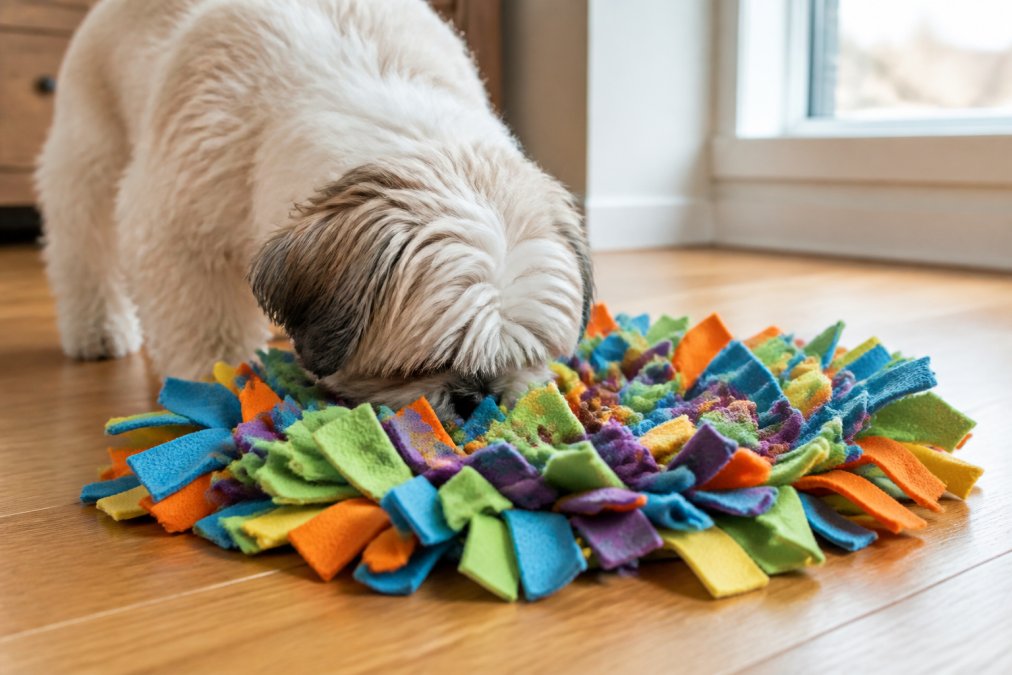
According to the American Kennel Club's guidance on canine enrichment, nose work and scent-based activities are among the most tiring mental exercises a dog can perform. A 15-minute snuffle session can leave a small dog calmer and more settled than a longer walk.
The Real Benefits of Snuffle Mats for Dogs
Slowing Down Fast Eaters
Fast eating is a real problem for small dogs. Breeds like Pugs, French Bulldogs, and Boston Terriers are especially prone to gulping food, which causes bloating and gastrointestinal discomfort. A snuffle mat forces the dog to eat one small piece at a time, extending mealtime from seconds to several minutes.
The physical act of sniffing and searching activates different neurological pathways than simply eating from a bowl. Many small dog owners report that their dogs are noticeably calmer after eating from a snuffle mat versus a standard bowl.
Easing Anxiety and Reducing Destructive Behavior
Boredom and anxiety are the root causes of most destructive behavior in dogs. Chewing furniture, excessive barking, and restless pacing signal an under-stimulated dog. Snuffle mats address this by giving the dog a legitimate, absorbing task.
Scent-based foraging triggers the release of dopamine in a dog's brain, creating a calm, satisfied state that persists after the activity ends. For dogs with separation anxiety, a snuffle mat given just before the owner leaves can ease the transition during the highest-stress moment.

According to the ASPCA's behavioral guidance on canine enrichment activities, providing daily mental stimulation is one of the most effective strategies for reducing anxiety-driven destructive behavior in companion dogs.
Snuffle Mat vs Puzzle Feeder: Which One Wins?
A snuffle mat engages primarily through scent, with the dog using its nose to locate food hidden in soft fabric layers. A puzzle feeder engages through problem-solving: the dog must figure out how to move sliders, lift compartments, or spin discs to access the reward. Both slow eating and provide cognitive stimulation, but the experience is distinct.
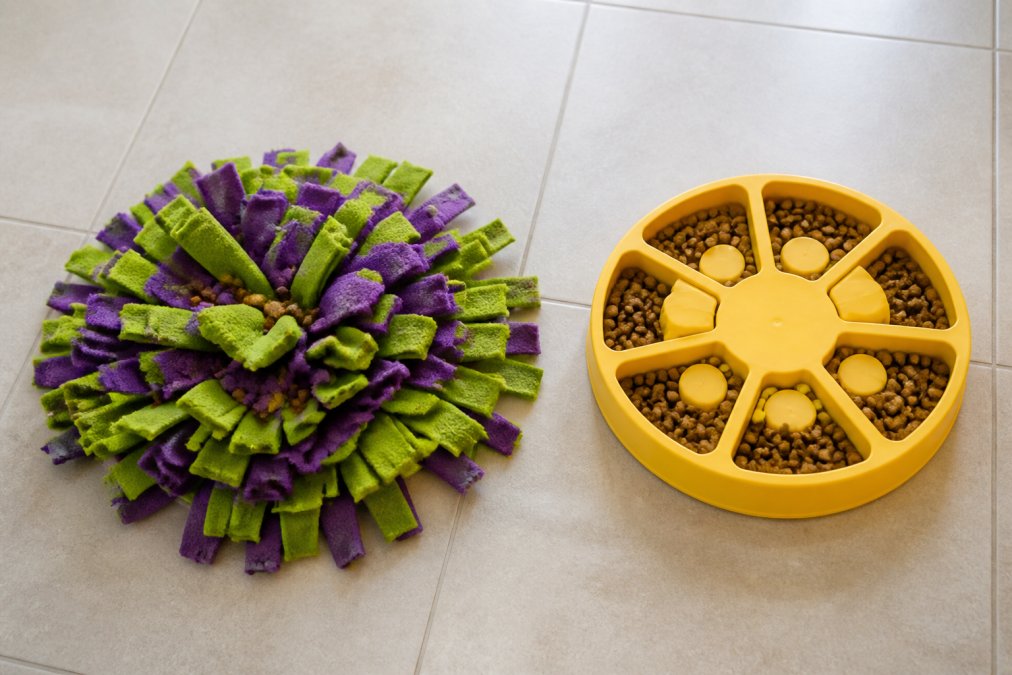
Snuffle mats tend to work better for anxious dogs, senior dogs, and dogs new to enrichment toys because the activity is intuitive with no learning curve. Puzzle feeders require more trial and error, which can frustrate timid or less confident dogs.
| Feature | Snuffle Mat | Puzzle Feeder |
|---|---|---|
| Primary sense engaged | Scent | Problem-solving / touch |
| Learning curve | Very low | Low to moderate |
| Best for anxious dogs | Yes | Sometimes |
| Best for senior dogs | Yes | Depends on difficulty |
| Mess level | Low | Low to moderate |
| Cleaning | Hand wash or machine wash | Dishwasher-safe (most) |
| Durability | Moderate | High |
| Engagement style | Independent, calm | Active, investigative |
When a Puzzle Feeder Makes More Sense
A puzzle feeder is the better choice when your dog has already mastered the snuffle mat and needs more challenge. Dogs that clear a snuffle mat in under two minutes are ready to move up. The Interactive Dog Food Puzzle Bowl from Paws & Claws at $24.99 is designed for food searching and slow feeding with chew-resistant materials. For dogs that have outgrown basic snuffle mats, the Interactive Pet Puzzle Feeder Toy for Dogs and Cats at $39.99 adds multi-compartment challenge with BPA-free materials.

Most small dog owners benefit from having both and rotating them to prevent boredom.
How to Use a Snuffle Mat for Enrichment
Start simple by scattering kibble or small treats across the top of the mat without burying them deeply. Let the dog succeed quickly on the first few sessions. Once the dog understands the game, begin tucking treats deeper into the fleece strips to increase difficulty.
Keep sessions to 10-20 minutes. For most small dogs, one snuffle mat session per day is sufficient enrichment, though twice daily works well for dogs with higher mental stimulation needs.
Always supervise the first few sessions. Some dogs try to eat the mat itself rather than the food hidden in it. If that happens, redirect with a firm "leave it" and offer the food by hand until the dog understands the intended behavior.
Age-Specific Tips: Puppies vs. Senior Dogs
Puppies take to snuffle mats quickly because foraging is instinctive. Use the mat as part of mealtime from the start, but keep sessions short, around five to ten minutes.
Senior dogs benefit enormously from snuffle mats because the activity is low-impact physically while still providing meaningful cognitive engagement. For older dogs with reduced mobility or arthritis, a mat placed flat on the floor at a comfortable height is ideal. Use high-value treats to maintain interest if the dog's sense of smell has diminished with age.
Snuffle Mat Safety, Cleaning, and Maintenance
A snuffle mat that isn't cleaned regularly becomes a bacterial breeding ground, and one that's poorly constructed can shed material that a dog ingests.
What to look for in a safe snuffle mat:
- Fleece strips that are securely knotted, not glued
- A rubber or non-slip base that won't slide on hardwood or tile
- Pet-safe, non-toxic dye in the fabric
- No small plastic attachments that could detach and be swallowed
- Durable materials that hold up to vigorous nosing and pawing
Cleaning schedule:
Most fabric snuffle mats can be hand-washed in warm water with mild, fragrance-free soap or placed in a mesh laundry bag and run through a gentle machine wash cycle. Air dry completely before the next use. Damp mats develop mold quickly, which is a genuine health risk.
| Usage Frequency | Cleaning Frequency |
|---|---|
| Daily use | Weekly wash |
| Every other day | Every 10-14 days |
| Occasional use | After every 5-6 sessions |
| Wet food or raw treats used | After every session |
Inspect the mat each time you use it. Pull gently on several fleece strips to check that they're still firmly attached.
Budget-Friendly DIY Snuffle Mat Ideas
Snuffle mats are one of the easiest enrichment tools to make at home, and a DIY version can cost under five dollars in materials.
Basic DIY snuffle mat:
- Purchase a rubber sink mat or non-slip shelf liner with holes
- Cut fleece fabric into strips approximately 20-25 centimeters long and 3-4 centimeters wide
- Thread each strip through a hole in the mat and tie it in a knot
- Repeat until the mat surface is densely covered
- Trim any uneven strips and check all knots are secure before use
Fleece is the preferred material because it doesn't fray when cut, eliminating the loose thread problem that makes some commercial mats less safe.
According to the Humane Society's guide to pet enrichment on a budget, homemade enrichment tools are just as effective as commercial options when made with pet-safe materials.
When a Snuffle Mat Isn't Enough: Expanding Your Dog's Enrichment Routine
Snuffle mats are excellent, but they're one tool, not a complete enrichment strategy. Dogs that rely on a single enrichment activity eventually habituate to it. Rotating toys and varying the type of mental challenge maintains long-term engagement.
A well-rounded small dog enrichment routine includes:
- Scent-based foraging: Snuffle mats, scatter feeding on grass, treat-hiding games
- Problem-solving: Puzzle feeders, interactive food bowls, lick mats
- Physical engagement: Short training sessions, fetch, tug with appropriate toys
- Novelty: Rotating toys in and out of rotation so nothing becomes stale
A toy that's available every day becomes furniture. A toy that appears twice a week stays interesting. Many small dog owners keep three to four enrichment tools in rotation.
For dogs that have mastered snuffle mats and basic puzzle feeders, the Interactive Pet Feeder Toy from Paws & Claws at $29.99 randomly launches balls, encouraging the dog to chase and stay physically active alongside mental engagement. The Smart Interactive Moving Ball for Dogs & Cats at $14.99 and the Interactive Bouncing Ball USB Rechargeable Pet Toy at $14.99 both provide self-play engagement useful for dogs prone to separation anxiety.

If a dog shows no interest in a snuffle mat after several attempts, try using higher-value treats such as small pieces of chicken or cheese rather than dry kibble. If disinterest persists, the issue may be anxiety, and a consultation with a certified animal behaviorist is worth considering.
Verdict: Are Snuffle Mats Worth It for Small Dogs?
Snuffle mats are worth it for small dogs. They address real behavioral needs, are low-cost relative to their benefit, and work for dogs across a wide age range from puppies to seniors.
A snuffle mat works best as part of a broader enrichment routine rather than as a standalone solution. A dog that only has a snuffle mat will eventually get bored. A dog that has a snuffle mat plus a puzzle feeder plus an active toy in rotation will stay engaged, calmer, and mentally healthier long-term.
For small dog owners new to enrichment toys, a snuffle mat is the right starting point. It's intuitive, low-risk, and immediately rewarding for the dog. From there, adding puzzle feeders and interactive toys builds a complete enrichment strategy that addresses the full range of a small dog's cognitive and physical needs.
Frequently Asked Questions
Are snuffle mats safe for small dogs?
Snuffle mats are generally safe for small dogs when used with supervision. The main risks are ingestion of loose fabric fibers or rubber backing pieces if the mat starts to wear. Always inspect the mat before each use, remove it once your dog finishes eating, and replace it if you notice fraying or torn pieces. Choose mats made from pet-safe, non-toxic materials and avoid leaving your dog alone with one unsupervised until you know how they interact with it.
How do snuffle mats help with small dog anxiety?
Sniffing is a naturally calming activity for dogs. The foraging behavior a snuffle mat encourages activates a dog's scent-driven focus, which lowers arousal and redirects nervous energy. For small dogs prone to anxiety during thunderstorms, vet visits, or time alone, a snuffle mat loaded with kibble or small treats gives them a productive outlet. Many owners report noticeably calmer dogs after just 10-15 minutes of snuffle mat use.
How often should you wash a snuffle mat?
Washing a snuffle mat once a week is a reasonable baseline for most small dogs. If your dog drools heavily or you use wet food or soft treats, wash it every two to three days. Most fabric snuffle mats are machine washable on a gentle cycle with mild, fragrance-free detergent. Air dry completely before the next use to prevent mold or mildew from developing inside the dense fleece strips.
Can a snuffle mat replace a food bowl for small dogs?
A snuffle mat can serve as a full meal replacement for a food bowl, and many small dog owners make it part of their daily feeding routine. It slows eating speed, provides mental stimulation, and turns mealtime into an enrichment session. That said, it works best with dry kibble. Wet or semi-moist food can mat the fibers and is harder to clean thoroughly. Rotating between a snuffle mat and a puzzle feeder keeps things fresh and prevents your dog from losing interest.
What size snuffle mat is best for a small dog?
For small breeds, a snuffle mat roughly 12 to 16 inches across gives enough surface area to hide a full meal without being so large that it becomes overwhelming or takes up too much floor space. Mats that are too big can frustrate small dogs who struggle to reach the center sections. Look for a mat with medium-length fleece strips, around 3 to 4 inches, which are long enough to hide treats but short enough that a small dog's shorter snout can still root through them effectively.
Small dogs deserve enrichment that matches their intelligence and curiosity, not just a bowl and a bed. A snuffle mat is one of the most effective and affordable ways to give them that. Pair it with the right puzzle feeders and interactive toys from Paws & Claws, and you'll see the difference in your dog's behavior, focus, and overall happiness within days. Add to cart and give your small dog the mental workout they've been waiting for.