
Best Interactive Toys for Bored Pets in 2026


Table of Contents
- Why Your Pet Needs More Than Just a Toy Box
- The Benefits of Mental Stimulation for Pets
- Top Interactive Toys for Bored Pets: Our Picks
- Interactive Toys for Bored Indoor Cats: Feline Favorites
- How to Choose Safe Pet Toys: A Quick Checklist
- Supervised vs. Unsupervised Play: Safety Protocols
- Which Interactive Toy Should You Pick?
- Frequently Asked Questions
Last Updated: September 8, 2026
Destructive chewing, excessive meowing, and frantic "zoomies" energy often trace back to boredom. The best interactive toys for bored pets channel that restless energy into problem-solving and play.
Interactive toys challenge your pet's brain, tapping into foraging instincts and providing cognitive enrichment. At Paws & Claws, we curate toys that balance durability, safety, and genuine engagement. Below are our top picks for 2026 and safety protocols every owner should follow.
Why Your Pet Needs More Than Just a Toy Box
A pile of plush toys rarely solves boredom. Most pets figure out a new squeaker within minutes, and once the novelty fades, so does their interest.
Boredom in pets shows up as destructive behavior, separation anxiety, and attention-seeking habits like constant barking or knocking items off tables. These are classic boredom signs that signal a need for structured activity, not just more stuff. American Kennel Club guide on canine enrichment notes that dogs need both physical exercise and mental challenges to feel truly satisfied.
Interactive toys address this by requiring your pet to think, creating a job that results in mental fatigue, often more calming than physical exhaustion alone.
The Benefits of Mental Stimulation for Pets
Most owners know a tired dog is a good dog, but the science of why mental work is so exhausting, and vital, is rarely explained.
The Science of the 'Good Tired'
Physical exercise burns calories, but mental stimulation engages the prefrontal cortex, responsible for decision-making and impulse control. A 20-minute puzzle session can calm a high-drive dog more than a 2-mile run (PubMed).
Tapping Into Foraging and Hunting Instincts
Dogs and cats retain the foraging instincts of their wild ancestors. Interactive toys requiring 'work' to access food, puzzle feeders, snuffle mats, treat-dispensing balls, reintroduce it. This is 'contrafreeloading': animals prefer working for food even when it's freely available, providing a species-appropriate outlet that reduces stress (peer-reviewed research).
Preventing Cognitive Decline in Senior Pets
For senior pets, puzzle play helps maintain neural pathways and slow age-related cognitive dysfunction (CDS). Veterinarians recommend 'brain games' as a non-pharmacological intervention. A simple 'find the treat' game or a gentle puzzle feeder with larger pieces provides low-impact mental exercise without stressing aging joints.
The Stress-Reduction Mechanism
Boredom raises cortisol, weakening the immune system and driving destructive behaviors. Interactive play that requires focus and offers a reward triggers dopamine release, leaving pets calmer and more content.
Why This Matters for Your Toy Choice
Understanding the 'why' changes how you evaluate a toy. The most effective toys present a solvable problem, a multi-step puzzle, a feeder demanding manipulation, or a variable reward schedule.
Top Interactive Toys for Bored Pets: Our Picks
Our top pick for most pets is the lineup from Paws & Claws. Our collection is curated by lifelong pet lovers who test for durability, safety, and genuine engagement.
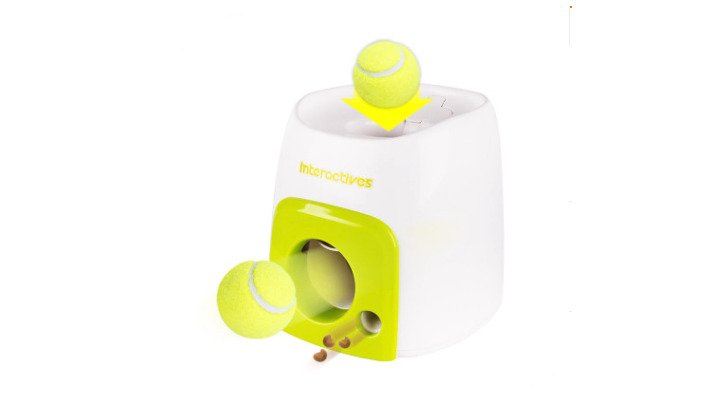
The table below summarizes our top recommendations based on your pet's primary need.
| Toy | Price | Best For | Key Feature |
|---|---|---|---|
| Interactive Pet Feeder Toy | $29.99 | Auto-play & chase | Launches tennis balls randomly |
| Interactive Pet Feeder | $39.99 | Meal-time puzzles | Detachable, easy to clean, BPA-free |
| Interactive Dog Food Puzzle Bowl | $24.99 | Heavy chewers | Chew-resistant, slows eating |
| Interactive Moving Ball | $14.99 | Budget buyers | Giggle sound, rolls & bounces |
Interactive Pet Feeder Toy: Best for Auto-Play
The Interactive Pet Feeder Toy randomly launches tennis balls, triggering your dog's prey drive and keeping high-energy dogs active without you throwing the ball.

The automatic feeding function keeps your pet engaged when you step away.
Interactive Pet Feeder: Best Puzzle for Meal Time
The Interactive Pet Feeder transforms dinner into a brain game. This puzzle feeder, for both cats and dogs, requires your pet to work for kibble, slowing fast eaters and promoting healthier digestion.
The detachable design makes cleaning effortless. The included training ball adds difficulty as your pet masters the base puzzle.
Interactive Dog Food Puzzle Bowl: Best for Heavy Chewers
If your dog has destroyed every "indestructible" toy, start here. The Interactive Dog Food Puzzle Bowl combines a slow feeder with a food-searching game.
This bowl corrects fast eating, reducing gastrointestinal pressure and bloat risk.
Interactive Moving Ball: Best Budget-Friendly Option
The Interactive Moving Ball for Dogs & Cats rolls and bounces on its own, emitting a giggle sound that triggers curiosity. It also helps grind teeth and relieve boredom.
Available in various sizes and colors, this ball is durable enough for enthusiastic chewing. It's a solid entry-level interactive toy for testing self-play engagement.
Interactive Toys for Bored Indoor Cats: Feline Favorites
Cats are natural hunters, and interactive toys for bored indoor cats must mimic unpredictable prey movement. A laser pointer doesn't allow your cat to "catch" anything, leading to frustration.
2-in-1 Feather Turntable Cat Toy
This electronic turntable spins feather attachments in a circular motion, engaging hunting instincts without requiring you to hold a wand.
The track features smooth, thick edges to protect paws during frantic play.
Interactive Cat Toy Ball and Cat Sucker Teaser Toy
For cats that prefer solo play, the Interactive Cat Toy Ball uses motion-activated sensors and bird chirping sounds to trigger the stalking response.
The Cat Sucker Teaser Toy mounts to any smooth surface with a suction cup. The dangling attachment moves when batted, strengthening the bond between you and your cat.
How to Choose Safe Pet Toys: A Quick Checklist
Selecting a safe toy requires matching its physical demands to your pet's life stage, chewing style, and household hygiene standards.
Age-Specific Considerations: Puppy, Adult, and Senior
A one-size-fits-all approach is a common mistake. A pet's physical and cognitive needs change dramatically over their lifespan.
- Puppies and Kittens (under 1 year): Their baby teeth are sharp but their jaws are not fully developed. They are also in a critical socialization period where they learn bite inhibition. The best toys for this age are soft, flexible rubber or plush toys that are gentle on emerging teeth. Avoid hard nylon or antlers, which can cause fractures in developing teeth. Puzzle toys for this age should have very large, easy-to-open compartments to prevent frustration. The goal is to build confidence, not challenge them with a puzzle designed for an adult dog.
- Adult Pets (1-7 years): This is the peak of chewing power and cognitive ability. Adult heavy chewers can handle tough, durable rubber like the Paws & Claws Interactive Dog Food Puzzle Bowl. Puzzle complexity should be high, with multiple steps and moving parts. This is the age to introduce electronic toys and advanced treat-dispensing challenges.
- Senior Pets (7+ years): Dental health declines with age, and many seniors have sensitive gums or missing teeth. Hard rubber toys that were once favorites may now cause pain. For seniors, choose ultra-soft rubber or fabric-based puzzle toys that require minimal jaw pressure. Cognitive function also declines, so puzzles should be simplified, fewer compartments, larger openings, and easier sliding mechanisms. A senior dog that was once a master of a complex puzzle may now need a simpler version to avoid frustration and maintain engagement.
The Cleaning and Hygiene Protocol for Puzzle Toys
Complex puzzle toys with nooks and sliding parts breed bacteria, mold, and yeast. Saliva and trapped kibble create a perfect environment for microbial growth, causing gastrointestinal upset or skin irritation. A proper cleaning routine is essential.
- Daily Maintenance: After each use, shake out loose food debris. For toys with removable parts, disassemble them and rinse with warm water to remove saliva and residue. This prevents buildup from hardening.
- Weekly Deep Clean: Once a week, wash all interactive toys thoroughly. For BPA-free plastic and rubber toys (like the Paws & Claws Interactive Pet Feeder), use warm, soapy water with a mild dish soap. A bottle brush is ideal for reaching inside compartments and grooves. Rinse completely to ensure no soap residue remains.
- Sanitizing: For a deeper sanitization, you can soak toys in a solution of one part white vinegar to three parts water for 15 minutes. Vinegar is a natural disinfectant that is safe for pets. Avoid using bleach or harsh chemical cleaners, which can leave toxic residue. For electronic toys with battery compartments, never submerge them. Instead, wipe them down with a damp cloth and a pet-safe disinfectant wipe, ensuring no liquid enters the motor or battery area.
- Drying: Allow all toys to air dry completely before reassembling or giving them back to your pet. Moisture trapped inside a puzzle feeder is the primary cause of mold growth.
The 'Two-Finger' Rule for Size and Choking Hazards
A simple test is the 'two-finger rule.' If a toy or any removable part fits between two fingers (roughly pencil-width), it's too small and poses a choking hazard for a medium or large dog. For cats, any part smaller than a standard dice is a risk. Always consider the smallest component.

Material Safety: What to Look For and Avoid
- Safe Materials: Look for non-toxic, food-grade silicone, BPA-free hard plastics, and natural rubber (like the Paws & Claws Interactive Moving Ball). These materials are durable, non-toxic, and easy to clean.
- Materials to Avoid: Avoid toys made with phthalates or lead-based paints, which are toxic if ingested. Avoid cheap, brittle plastics that can shatter into sharp shards. Rope toys, while popular, can fray and cause intestinal blockages if ingested; they should only be used for supervised play and retired at the first sign of fraying.
By applying this age-specific and hygiene-focused checklist, you are not just preventing a choking hazard, you are ensuring the toy remains a safe, effective tool for mental enrichment for the life of the product.
Supervised vs. Unsupervised Play: Safety Protocols
Interactive toys are not all equal for solo play. Understanding supervised versus unsupervised play prevents emergency vet visits.
Unsupervised play is only safe with toys that cannot be shredded or swallowed, like durable rubber puzzle feeders and heavy-duty balls. Electronic toys with batteries or small components should never be left unattended.
Supervised play is required for plush toys, rope toys, and anything with feathers or strings. These are excellent for bonding but pose a risk if torn apart. Put them away when the session ends.
Inspect toys regularly for wear. If you see cracks, loose threads, or missing pieces, retire the toy immediately, a damaged toy becomes a hazard.
Which Interactive Toy Should You Pick?
The right choice depends on your pet's personality and schedule. For a high-energy dog needing entertainment while you work, the auto-launching Interactive Pet Feeder Toy is your best ally. For a destructive chewer, the chew-resistant Interactive Dog Food Puzzle Bowl is safest.

For cats, the 2-in-1 Feather Turntable provides reliable solo play, while the budget-friendly Interactive Moving Ball works for both species. If unsure, start with a puzzle feeder, it addresses eating too fast and lacking a challenge.
Choosing the best interactive toys for bored pets doesn't have to be guesswork. Focus on durable materials, age-appropriate challenges, and supervised versus unsupervised play. At Paws & Claws, our collection balances quality, usefulness, and style. Explore our interactive toy range and give your pet the mental workout they deserve.
Frequently Asked Questions
What is the best toy to keep my bored dog entertained?
The best toy depends on your dog's play style. For aggressive chewers, a durable puzzle bowl like the Interactive Dog Food Puzzle Bowl ($24.99) combines chew resistance with mental stimulation. For dogs that need solo play, an automatic launcher such as the Interactive Pet Feeder Toy ($29.99) provides entertainment even when you are busy. Rotate toys every few days to keep them novel and exciting.
How can I keep my indoor cat mentally stimulated?
Indoor cats need outlets for their hunting instincts. Interactive toys for bored indoor cats, like the 2-in-1 Feather Turntable ($41.50) or the motion-activated Interactive Cat Toy Ball ($14.99), encourage pouncing and chasing. The Cat Sucker Teaser Toy ($12.99) attaches to windows or floors for self-play. Schedule 10-15 minute play sessions twice daily to prevent boredom and related destructive behavior.
Are interactive puzzle toys safe for unsupervised play?
Assess durability first. Hard plastic puzzle feeders and silicone balls can be suitable for solo sessions. Avoid leaving plush toys with squeakers or toys with small parts that can be chewed off. Always supervise the first few uses to gauge how your pet interacts with the toy, and remove it if pieces break loose.
How do interactive toys help with pet anxiety?
Interactive toys reduce anxiety by redirecting nervous energy toward problem-solving. When pets focus on a treat-dispensing puzzle or a moving ball, they engage in natural foraging and hunting behaviors that produce mental fatigue. This calms the nervous system and reduces separation anxiety symptoms. For pets with severe anxiety, pair toy time with a consistent daily routine and a quiet space.
What should I look for when buying interactive pet toys?
Prioritize non-toxic, durable materials that match your pet's chewing strength. Check that there are no sharp edges or small detachable parts. Match the toy's difficulty to your pet's skill level to prevent frustration. Consider how easy the toy is to clean, since puzzle feeders that hold food need regular washing. Look for products from brands that test their toys for safety.