
How to Choose Safe Toys for Cats: A 2026 Guide


Table of Contents
- Why Toy Safety Matters More Than You Think
- Cat Toy Choking Hazards to Avoid: What to Skip
- Non-Toxic Cat Toy Materials: What to Look For
- How to Choose Safe Toys for Cats by Age and Personality
- How to Supervise Cat Play Without Ruining the Fun
- The Safety Check Routine Every Cat Parent Needs
- Signs of Trouble: When to Call the Vet
- Safe Picks from Paws & Claws
- Frequently Asked Questions
Choosing the right playthings is about more than preventing boredom; it is a core part of responsible cat care. While many toys look fun on the shelf, some pose hidden risks that can lead to emergency vet visits. Learning how to choose safe toys for cats requires understanding the materials, construction, and supervision involved, so playtime stays fun rather than becoming a hazard. This guide from Paws & Claws breaks down the specific dangers to avoid, the materials to seek out, and the simple routines that keep your feline friend protected.
Why Toy Safety Matters More Than You Think
A cat's prey drive is powerful, and a toy that mimics a mouse or bird triggers intense pouncing, biting, and clawing. That natural enthusiasm means toys take a beating, and weak seams or flimsy parts can become dangerous quickly. When a toy breaks, pieces can be swallowed, leading to gastrointestinal obstruction, a painful and costly condition that often requires surgery.
The ASPCA notes that foreign body ingestion is a common issue for cats, making sturdy construction a non-negotiable feature rather than a luxury [ASPCA guide on cat toy(/products/2-in-1-pet-cat-toy-with-feather-for-self-play-cat-turntable-pets-supplies-cat-toy-toys-cats-items-products) safety | aspca.org]. Beyond the physical risks, the right toys provide essential environmental enrichment. Without appropriate outlets for their hunting instincts, many cats develop destructive behaviors or obesity from a sedentary lifestyle, so choosing safe, durable options supports both physical and mental health.
Cat Toy Choking Hazards to Avoid: What to Skip
The most common cat toy choking hazards to avoid include items with small plastic components, loose bells, and fragile embellishments that detach easily. Cats use their mouths to investigate, and anything that breaks off can become a choking hazard or end up swallowed. Buttons for eyes, glued-on ribbons, and feathers attached with weak adhesive are prime offenders that often fail during aggressive play.

Strings, yarn, and rubber bands are especially dangerous because they can cause severe internal damage if ingested. Unlike a small piece of plastic that might pass through, a string can become lodged in the intestines, creating a life-threatening obstruction. Always skip toys with long, trailing fibers and opt for designs where everything is securely stitched or molded into a single piece.
Non-Toxic Cat Toy Materials: What to Look For
When evaluating non-toxic cat toy materials, prioritize natural, food-grade options and clearly labeled plastics. Many commercial toys contain synthetic fibers and dyes that include heavy metals or phthalates, which are not safe for a cat that chews and mouths her toys. Look for toys made from organic cotton, wool, or natural rubber, and verify that any dyes used are vegetable-based rather than chemical.
For plastic toys, check the recycling code and avoid those with a strong chemical smell, which often indicates harmful additives. The FDA regulates animal feed but does not pre-approve pet toys, so the burden falls on owners to research brands that voluntarily test their materials FDA guidance on pet food and toys. A good rule of thumb: if a toy smells like a new shower curtain, it is likely off-gassing volatile compounds that your cat will inhale while playing.
How to Choose Safe Toys for Cats by Age and Personality
Safe toys for cats vary significantly based on age, energy level, and individual temperament. Kittens are teething and explore with their mouths, so they need soft, chewable toys that soothe sore gums without breaking into sharp pieces. Senior cats often prefer low-effort toys they can bat at while lying down, such as motion-activated balls or treat puzzles that require minimal jumping.
For high-energy breeds like Bengals or Siamese, interactive wands and turntable toys that mimic prey movement provide the vigorous physical stimulation they crave. Laid-back cats may prefer catnip-filled plush toys they can wrestle and kick. Observe your cat's play style for a week and match the toy to her behavior: a cat that loves to chase needs different toys than one that prefers to stalk and pounce.
| Life Stage | Play Style | Recommended Toy Type | Key Safety Feature |
|---|---|---|---|
| Kitten (0-1 year) | Teething, exploratory | Soft plush chew toys | Durable stitching, no small parts |
| Adult (1-7 years) | Active, predatory | Wand teasers, rolling balls | Breakaway attachments, non-toxic plastic |
| Senior (7+ years) | Low-energy, gentle | Catnip plush, treat puzzles | Lightweight, easy to grip |
| High-energy breeds | Intense chasing | Electronic turntable toys | Smooth edges, paw-safe track |
How to Supervise Cat Play Without Ruining the Fun
Supervision during play is essential, but it does not mean hovering over every swat. The key is to inspect toys before each session and be present during the first few uses to observe how your cat interacts with them. If your cat immediately tries to chew off a feather or bite through a seam, that toy should be reserved for interactive play only, where you control the movement and can end the session before damage occurs.

For solo play, choose toys that are inherently safer, such as solid rubber balls or track toys with enclosed components. Rotate toys every few days to maintain novelty, which keeps your cat engaged without requiring constant purchases. This rotation also gives you a natural reminder to inspect each toy for wear and tear before it goes back into circulation.
The Safety Check Routine Every Cat Parent Needs
A weekly five-minute safety inspection prevents most toy-related accidents. Start by checking all seams and stitching, pulling gently to see if any threads are loosening. Examine every embellishment, including eyes, noses, and bells, and discard any toy where these parts wiggle or show signs of detachment. Squeeze plush toys to ensure stuffing is not compacting into hard lumps that could be chewed out.
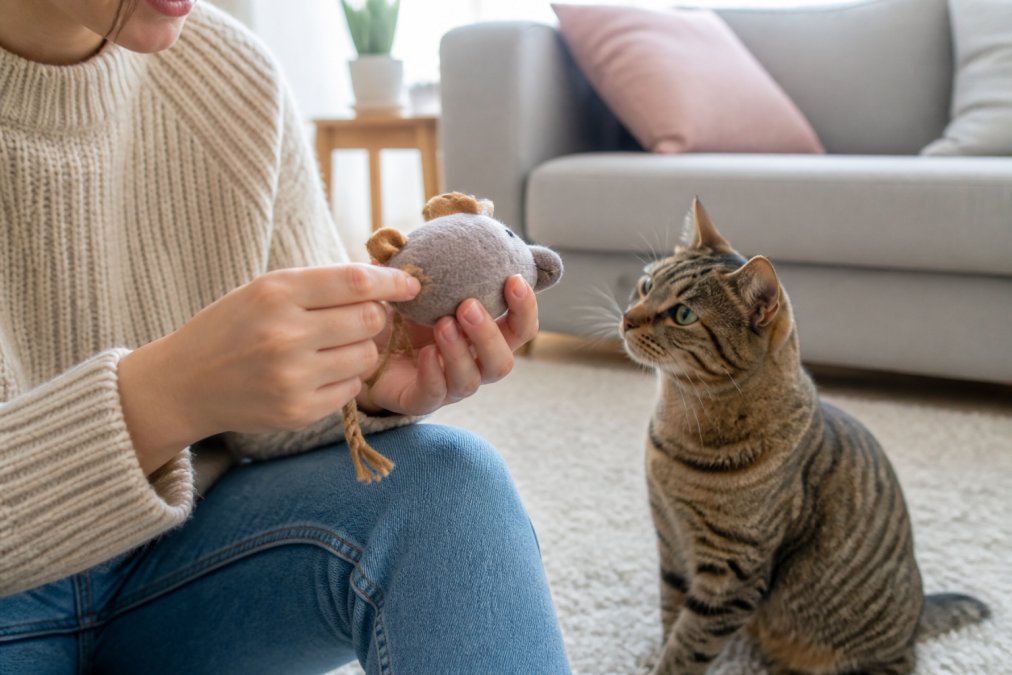
Inspect the surface for cracks, especially on plastic toys where sharp edges can develop. Establish a simple rule: when in doubt, throw it out. Replacement toys are inexpensive compared to an emergency vet bill. Store toys in a closed container between uses to prevent dust accumulation and keep them out of reach when you are not home.
Signs of Trouble: When to Call the Vet
Even with careful supervision, accidents happen. Knowing the post-ingestion emergency signs can save your cat's life. If you suspect your cat swallowed a toy part, watch for repeated vomiting, lethargy, loss of appetite, or straining to defecate without producing anything. These symptoms may not appear immediately, sometimes taking 24 to 72 hours to develop as the obstruction forms.
Cats are masters at hiding pain, so subtle changes in behavior, like hiding more than usual or becoming unusually vocal, warrant attention. Do not induce vomiting without veterinary guidance, as some objects can cause more damage coming back up. Contact your veterinarian immediately if you observe any of these signs, and bring the damaged toy with you to help the vet understand what was ingested Pet Poison Helpline on foreign body ingestion.
Safe Picks from Paws & Claws
At Paws & Claws, we curate every toy in our collection with safety as the first priority, which means you can shop with confidence knowing each item has passed our scrutiny. For active cats that need independent stimulation, the 2-in-1 Feather Turntable Cat Toy offers a smooth, paw-safe track with no small detachable parts, priced at $41.50. The durable plastic construction withstands enthusiastic batting, while the enclosed feather stays securely in place.
For cats that love to chew and kick, the Catnip Plush Chew Toy provides a safe outlet for teething instincts at $23.00. The textured surface helps clean teeth and remove tartar while the durable stitching resists shredding. The Interactive Cat Toy Ball, at $14.99, uses motion-activated sensors and bird chirps to trigger hunting behavior without any loose components that could break off. These picks reflect our commitment to toys that balance quality, usefulness, and style, giving you peace of mind and your cat endless entertainment.
Frequently Asked Questions
What are the safest materials for cat toys?
The safest cat toys are made from non-toxic materials like organic catnip, untreated natural cotton, and food-grade silicone. Avoid toys with synthetic fibers, toxic dyes, or plastic components that can break into sharp pieces. Look for toys labeled non-toxic and free from BPA, phthalates, and lead. For example, our Catnip Plush Chew Toy uses natural catnip and a textured surface that is safe for chewing, helping with dental health while satisfying your cat's urge to gnaw.
Are string and yarn toys safe for cats to play with unsupervised?
No. String, yarn, and ribbon toys are among the most dangerous options for unsupervised play. If swallowed, they can cause life-threatening gastrointestinal obstruction that requires emergency surgery. Feathers and loose fabric attached to strings create the same risk. Only bring these toys out during supervised interactive sessions, and store them in a closed drawer or container afterward. This simple habit prevents your cat from chewing on them overnight when you cannot intervene.
How can I tell if a cat toy is non-toxic?
Check the product label for explicit non-toxic claims and look for certifications like GREENGUARD Gold or ASTM F963 compliance. Avoid toys with a strong chemical smell, which often signals toxic dyes or synthetic materials. If the toy is made of fabric, choose undyed or vegetable-dyed options. When in doubt, contact the manufacturer directly and ask about their material sourcing. Our safe toys for cats, like the Cat Sucker Teaser Toy, use durable, non-toxic PP plastic and are designed with smooth edges to protect your cat.
How often should I inspect my cat's toy collection?
Conduct a quick safety check every time you rotate toys, which should happen at least once a week. Look for loose seams, broken stitching, detached eyes or bells, and any small parts that could become choking hazards. Squeeze plush toys to check for stuffing that might be escaping. If you find damage, throw the toy away immediately. Also, wash fabric toys monthly and wipe down plastic toys with a pet-safe cleaner to prevent bacteria buildup.
Choosing safe toys for cats takes a few minutes of research and regular inspection, but the payoff is a healthier, happier companion. The curated selection at Paws & Claws removes the guesswork, with every toy evaluated for durable construction, non-toxic materials, and appropriate design for different play styles. Browse our collection today and find toys that stimulate curiosity, encourage interactive play, and provide the peace of mind you deserve as a pet parent.